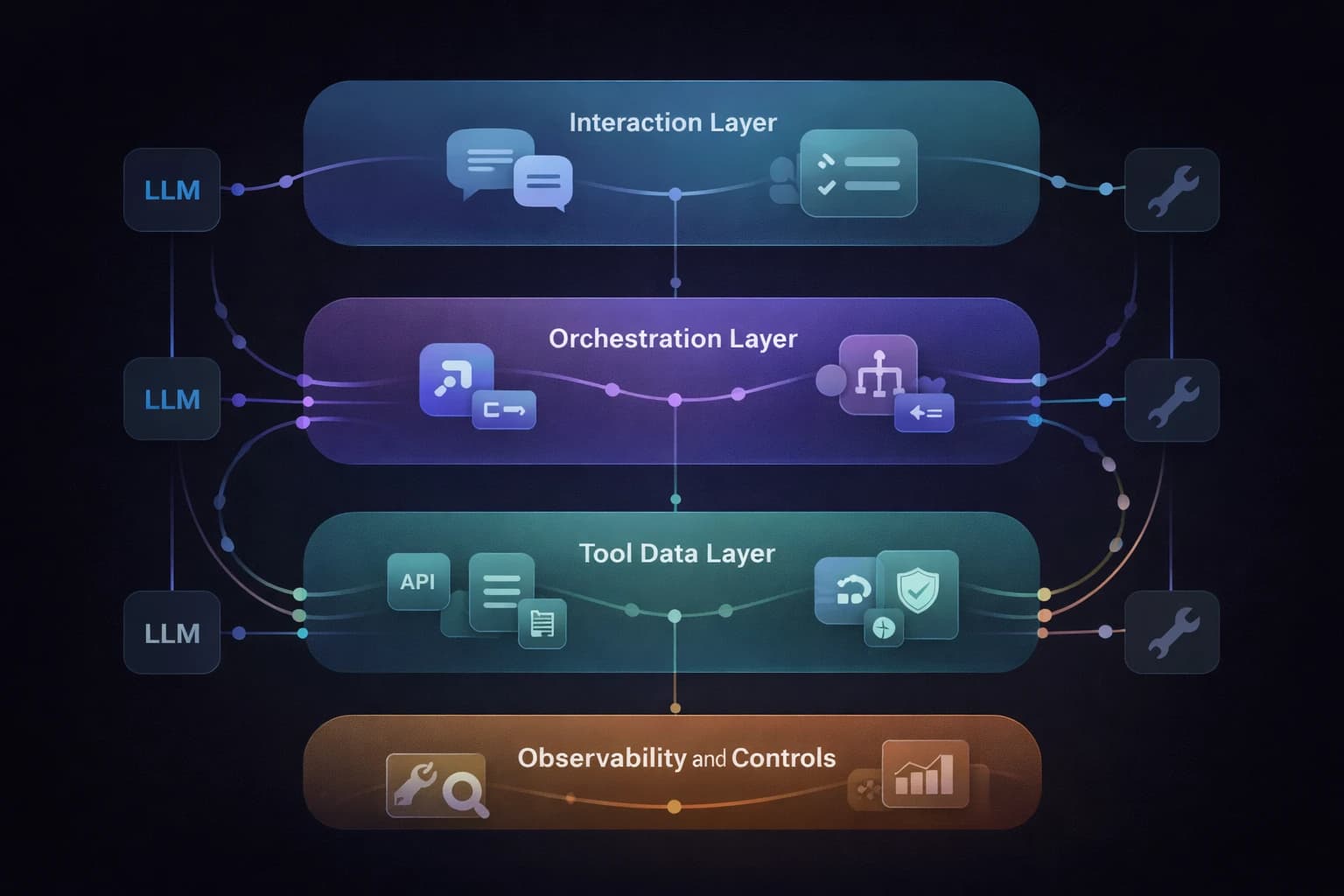
The Startup Agent Stack in 2026: What to Build and What to Skip
A founder-friendly breakdown of the modern AI agent stack and the minimum architecture needed to launch reliable agent workflows.
Read articleHow to choose the right repository model based on team size, product complexity, and operational maturity.
Both monorepo and multirepo models can work. The right choice depends on team coordination needs, release coupling, and tooling readiness.
Start with monorepo unless you have a clear operational reason not to. Move to multirepo later only when team structure and release boundaries demand it.
If you are deciding repository strategy while scaling delivery, contact us or book a call.
Share this article

Michael G
Founder (Product & Engineering)
Founder-led product engineering focused on fast execution and measurable outcomes.
A founder-friendly breakdown of the modern AI agent stack and the minimum architecture needed to launch reliable agent workflows.
Read article
A production playbook for AI products covering guardrails, evaluation loops, and observability patterns that reduce launch risk.
Read article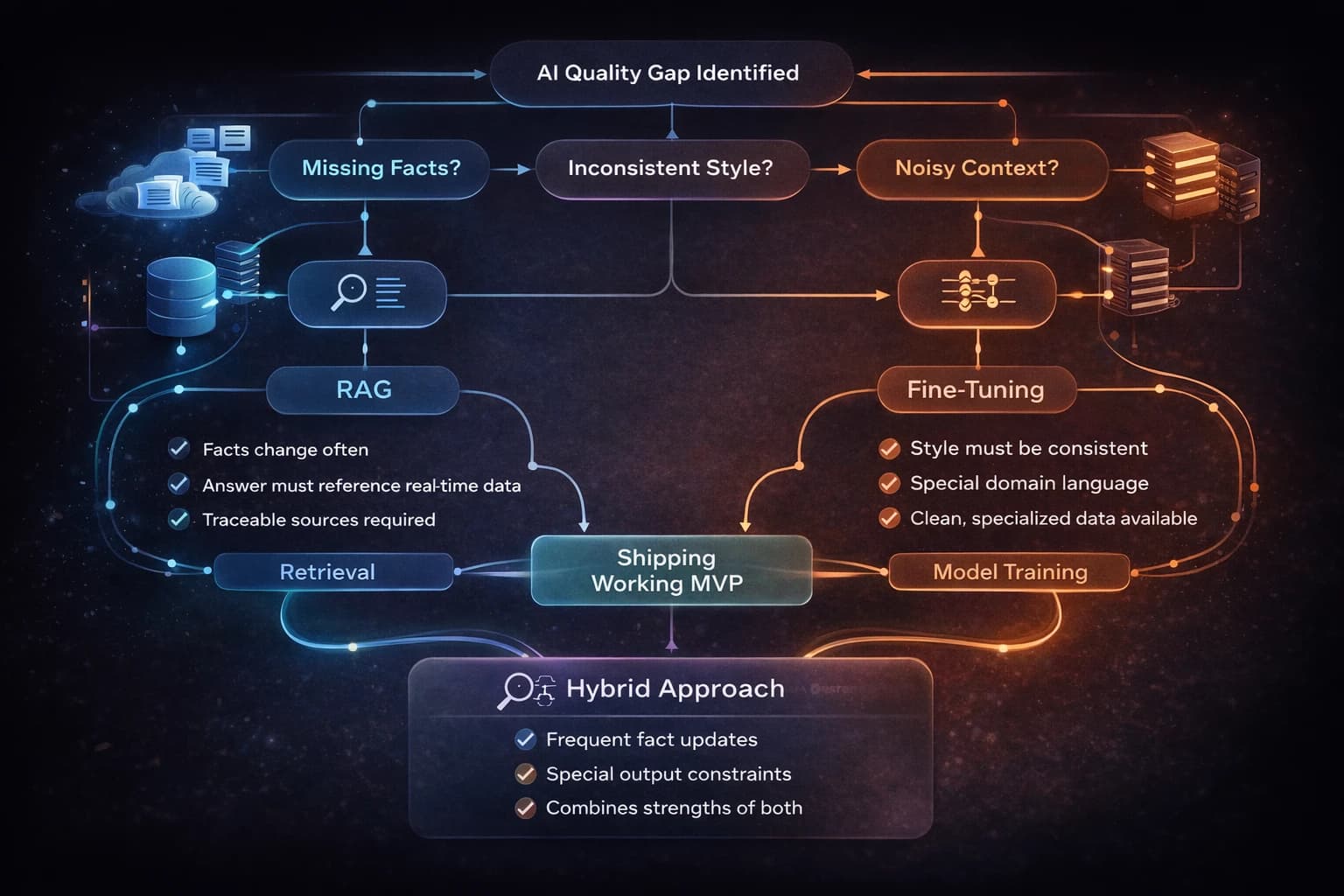
Use this startup-friendly framework to decide when RAG, fine-tuning, or a hybrid approach is the right path for your AI feature.
Read articleBook a focused call and we can map scope, delivery approach, and execution plan.