
AI Guardrails, Evals, and Observability: The Practical Playbook
A production playbook for AI products covering guardrails, evaluation loops, and observability patterns that reduce launch risk.
Read articleA founder-friendly breakdown of the modern AI agent stack and the minimum architecture needed to launch reliable agent workflows.
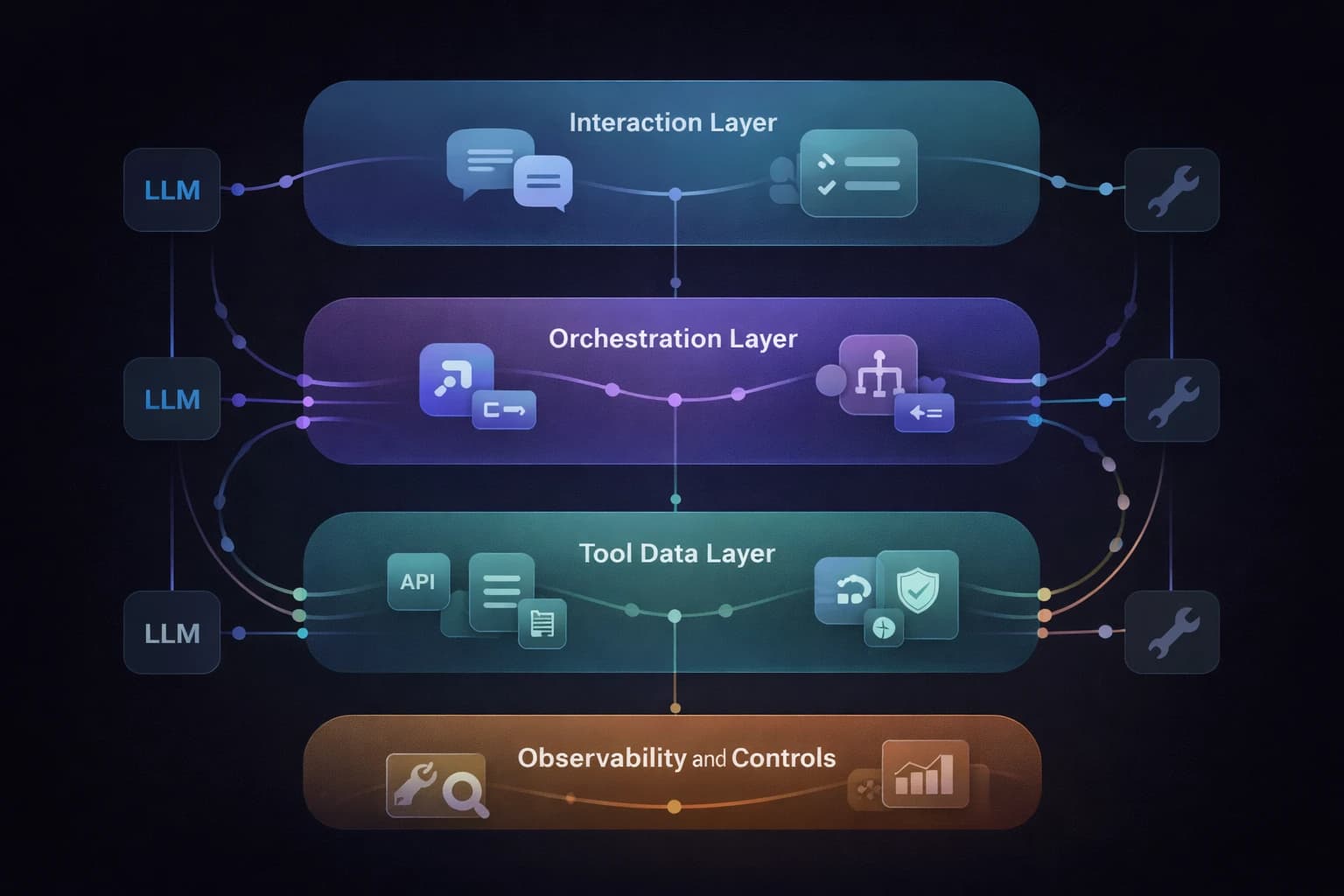
In the last year, agent tooling has moved from experimentation to real product workflows. The challenge for startups is not "Can we build agents?" It is "What is the minimum stack that ships value without platform sprawl?"
Recent platform releases made this easier:
Links:
You do not need a massive framework to start. You need clear boundaries.
If one layer is missing, agent behavior will feel unreliable in production.
Most teams overbuild in the first 30 days. Skip these until usage proves need:
Start narrow, then expand.
Pick an internal or customer workflow that has:
Good examples:
If you want to implement agent workflows with production constraints in mind, contact us or book a call.
Share this article

Michael G
Founder (Product & Engineering)
Founder-led product engineering focused on fast execution and measurable outcomes.

Qodeware Editorial
Editorial Team
Insights from the Qodeware team on product strategy, engineering, and AI-native delivery.
A production playbook for AI products covering guardrails, evaluation loops, and observability patterns that reduce launch risk.
Read article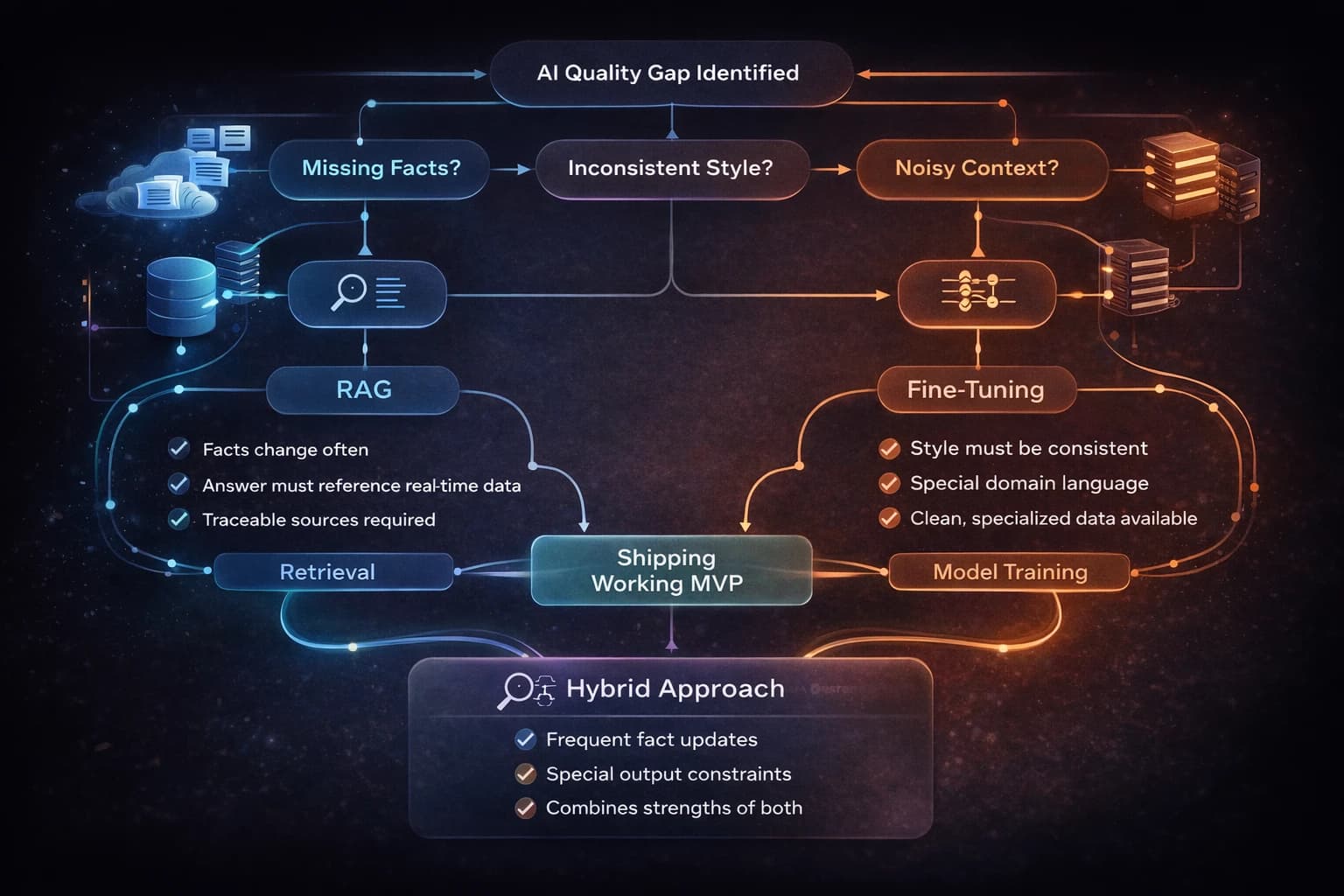
Use this startup-friendly framework to decide when RAG, fine-tuning, or a hybrid approach is the right path for your AI feature.
Read article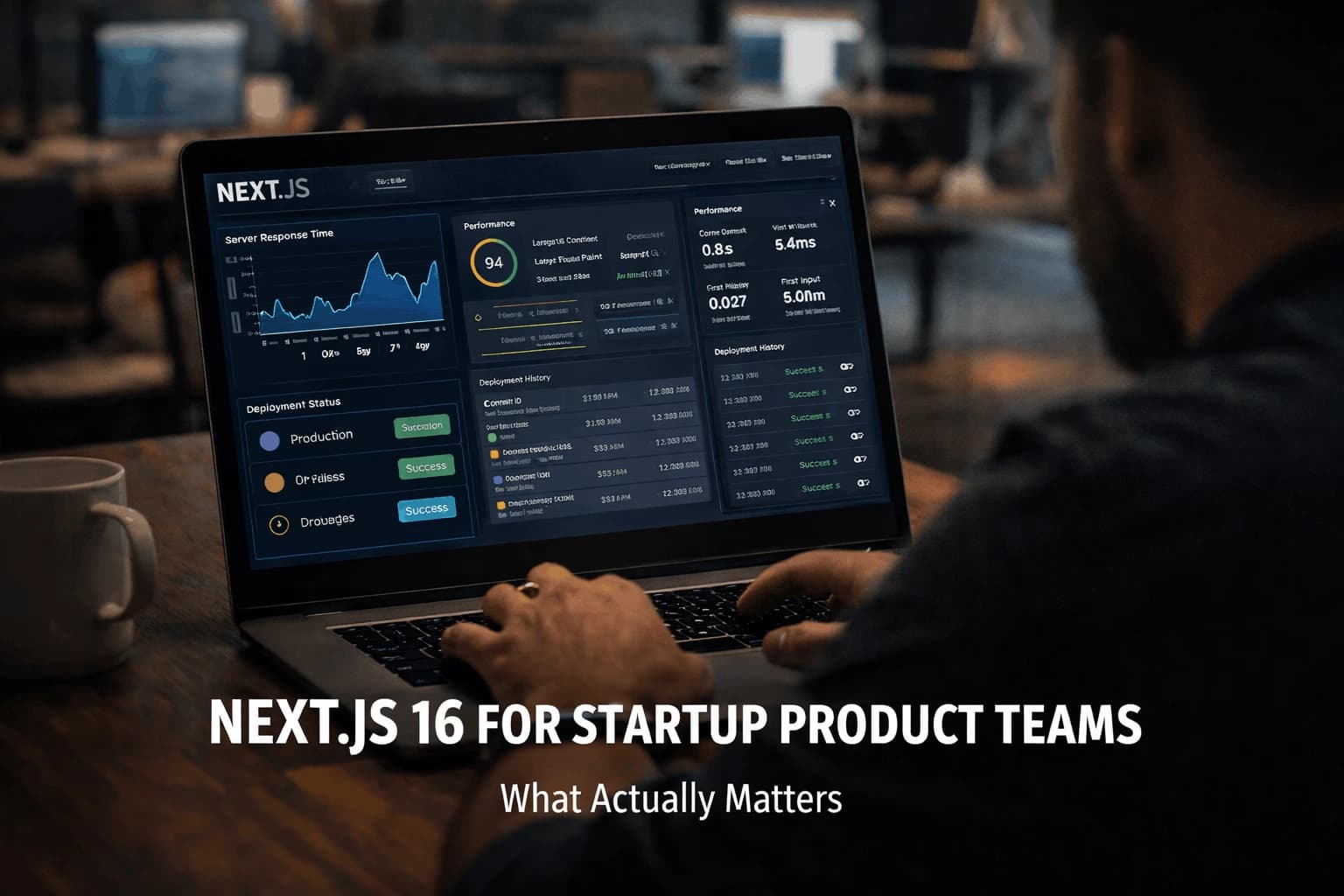
A practical view of which Next.js 16 capabilities actually improve speed, reliability, and long-term maintainability.
Read articleBook a focused call and we can map scope, delivery approach, and execution plan.