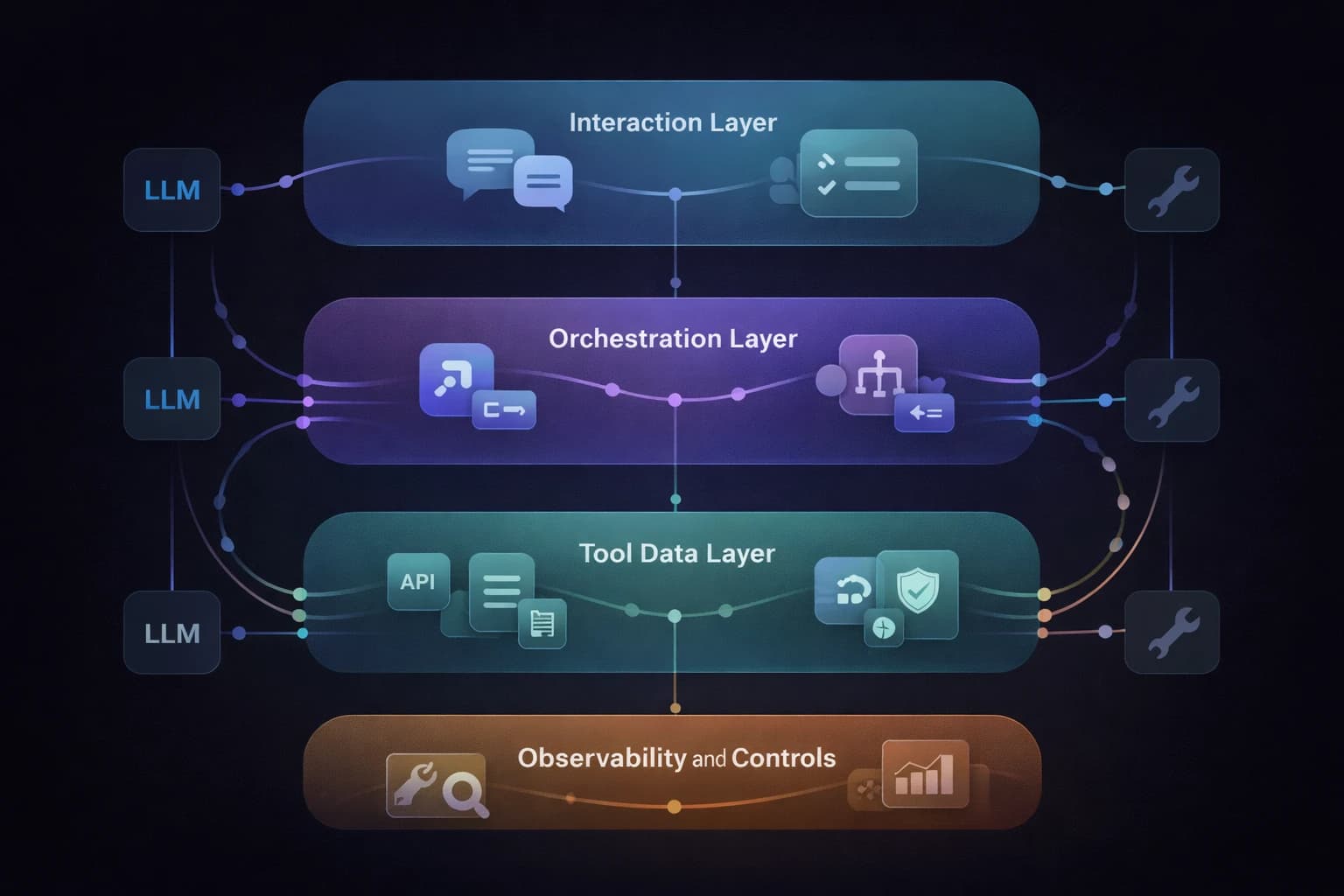
The Startup Agent Stack in 2026: What to Build and What to Skip
A founder-friendly breakdown of the modern AI agent stack and the minimum architecture needed to launch reliable agent workflows.
Read articleA production playbook for AI products covering guardrails, evaluation loops, and observability patterns that reduce launch risk.

AI features rarely fail because of the model alone.
They fail when teams lack visibility and control once the system is live.
Most issues in production come down to three questions:
Guardrails, evaluations, and observability provide the system to answer those questions consistently.
Guardrails shape behavior in real time.
This layer prevents bad states before they propagate.
Evals provide feedback on change.
This layer ensures that changes lead to improvement, not drift.
Observability provides visibility and fast diagnosis.
This layer reduces time to detect and recover from issues.
Start small and focus on what matters most.
This approach keeps complexity manageable while improving reliability.
Simple systems with clear signals outperform complex ones without direction.
If you need production-grade AI controls without slowing delivery,
Share this article

Michael G
Founder (Product & Engineering)
Founder-led product engineering focused on fast execution and measurable outcomes.
A founder-friendly breakdown of the modern AI agent stack and the minimum architecture needed to launch reliable agent workflows.
Read article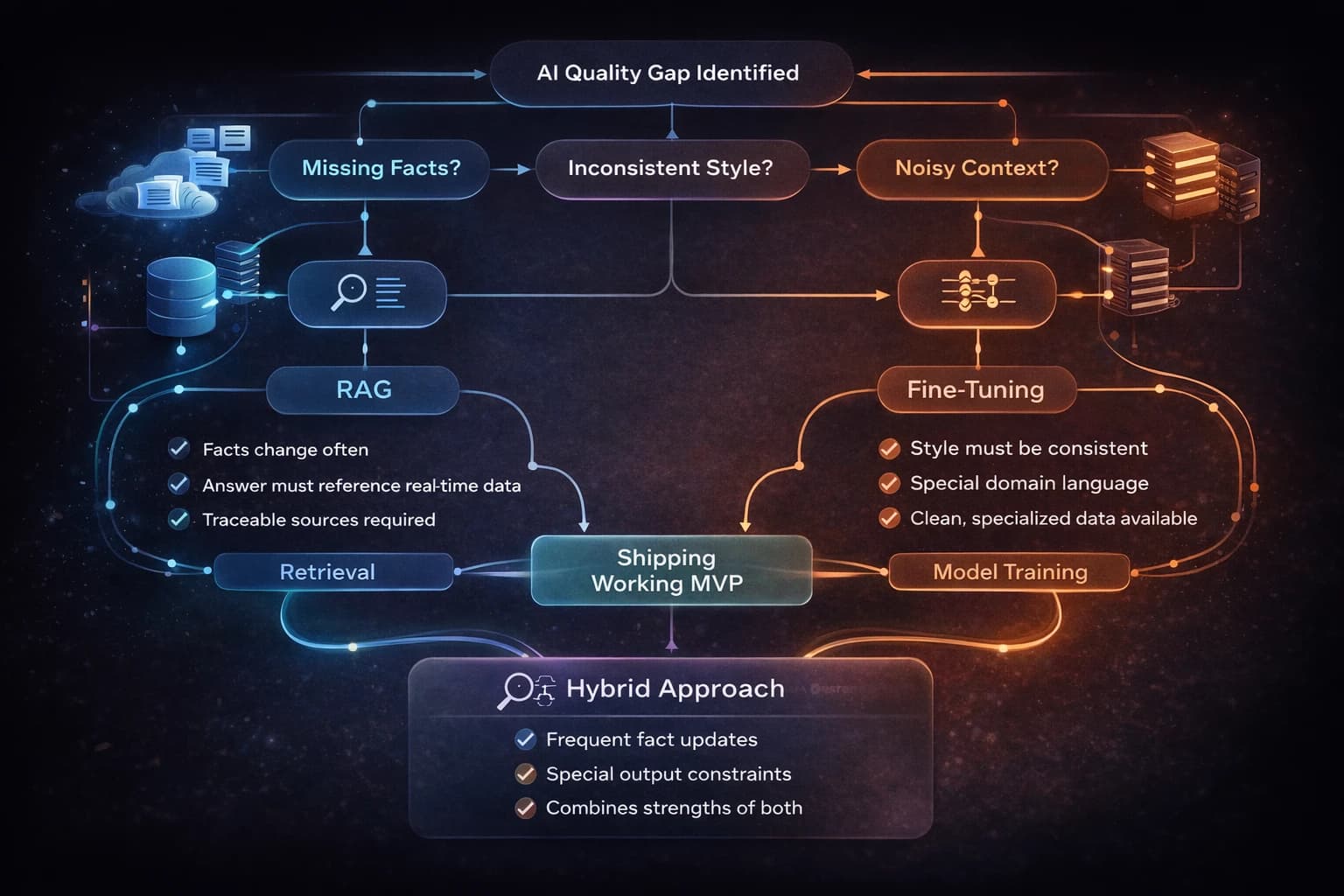
Use this startup-friendly framework to decide when RAG, fine-tuning, or a hybrid approach is the right path for your AI feature.
Read article
A practical framework to manage LLM cost, latency, and quality without slowing product delivery.
Read articleBook a focused call and we can map scope, delivery approach, and execution plan.