
Observability for Product Teams: Logs, Metrics, and Traces That Matter
A practical observability baseline for teams that need faster debugging and more reliable releases.
Read articleA pragmatic TypeScript operating model for teams that need faster delivery, cleaner contracts, and fewer regressions.

Most teams start with strong typing and gradually lose discipline under
delivery pressure. The result is increasing any, unclear contracts, and
runtime surprises.
Type definitions alone do not validate runtime data. Parse inputs from APIs, forms, and env vars before using them.
Core product types should live in stable domain modules. Avoid creating slightly different versions in multiple features.
Keep strict mode enabled and treat escaping it as an exception that needs justification.
For core services and helpers, explicit return types make refactors safer and prevent accidental type widening.
Type safety is weaker when any module can import from anywhere. Boundaries protect architecture, not just code style.
If your team needs cleaner type systems without slowing delivery, contact us or book a call.
Share this article

Michael G
Founder (Product & Engineering)
Founder-led product engineering focused on fast execution and measurable outcomes.
A practical observability baseline for teams that need faster debugging and more reliable releases.
Read article
How to roll out schema changes safely in production without blocking releases or disrupting users.
Read article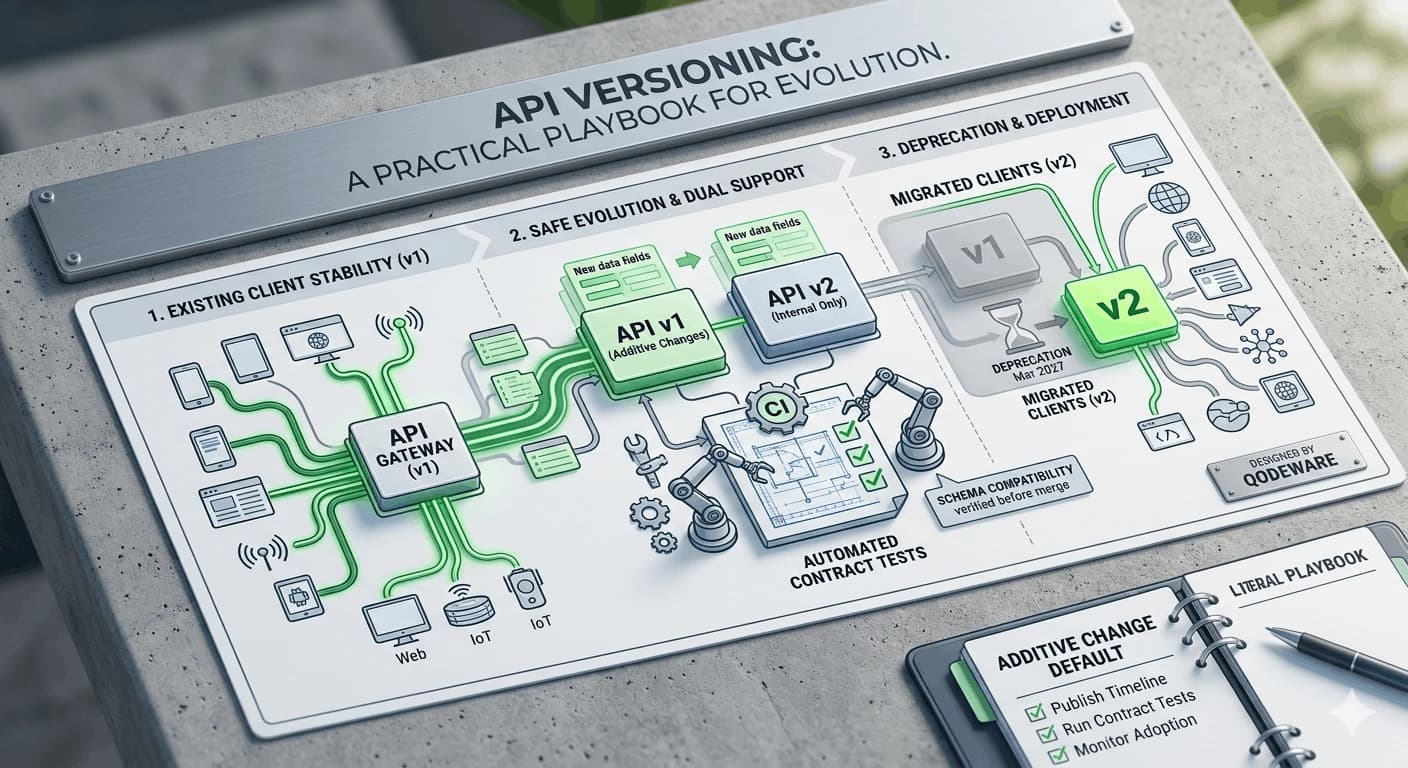
A practical approach to evolving APIs safely while keeping existing clients stable and release velocity high.
Read articleBook a focused call and we can map scope, delivery approach, and execution plan.